Multi-Sensory Rooms Bring Regulation and Calm to Detained Youth
A grant from the Ohio Department of Youth Services (ODYS) and partnership with MindPeace has resulted in the first of its kind multi-sensory de-escalation room (MSDR) for residents at the Court’s Youth Detention Center.
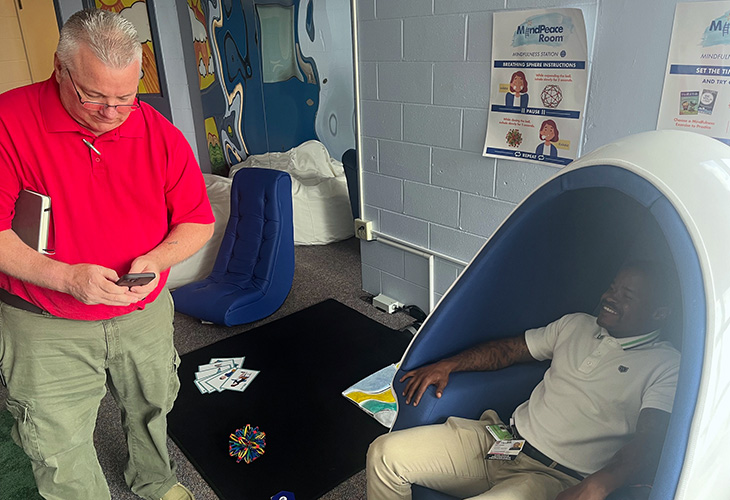
MSDRs are safe, trauma-informed spaces designed to help users improve behavior, self-regulation, process feelings, express emotions, and learn to manage anger.
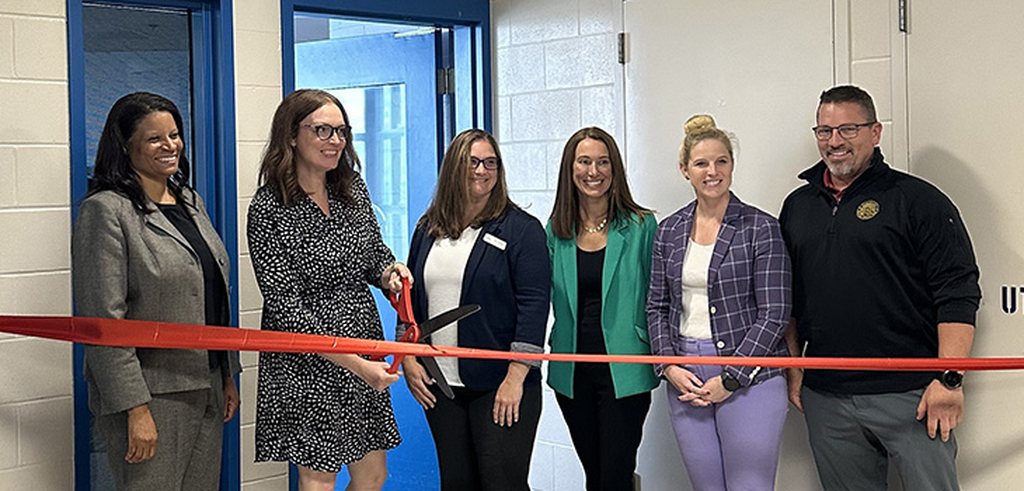
At a ceremonial ribbon-cutting for the room on Aug. 6, the Court and MindPeace welcomed guests from ODYS and Franklin County Juvenile Court who may be interested in replicating the model throughout the state.

“We are thankful for the grant funding that allowed us to make this space possible,” said Administrative Judge Kari Bloom. “It’s really an acknowledgement that kids not only need to be held accountable and responsible for what brought them to the Youth Center, they also need to be treated as kids with growing brains and bodies.”
Judge Bloom said many of the kids who are held at the Youth Center come from a background of trauma, abuse, and victimization. The Court’s multi-sensory environment gives kids “a space to help them learn about themselves, find some regulation, and get a little bit closer to healing.”
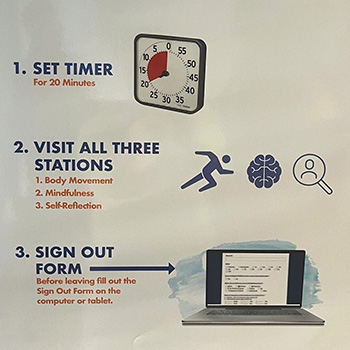
 The MindPeace Multi-Sensory Environment™ (MMSE) spaces include one large room with items such as a sound shell chair, noise cancelling earmuffs, recumbent bike, wobble balance board, and a variety of other items, big and small, to stimulate the nervous system. A smaller calming corner is located on each of the Youth Center’s 10 pods.
The Hamilton County Youth Center is the first juvenile justice facility in Ohio and second in the nation to implement these spaces. Research shows that a multi-sensory environment helps prevent violence and increases safety for residents and staff, while also teaching coping and self-regulation strategies that can lead to long-term resiliency skills.
“We’ve been doing this with adults for a long time,” said MindPeace Senior Vice President Nicole Pfirman. “It’s shocking to me that we haven’t had this in all detention centers across the country.”
 Pfirman, who spent 20 years in public education mostly in administration overseeing severe behavioral concerns and discipline issues among children, says, “We cannot consequence kids out of behavior. What we have to do is change the environment, change the adult, change the response, create an environment that is holistically focused on wellness and when we do those things and do them proactively, kids start to change their behaviors.”
Since opening in February, there have been nearly 100 visits from residents. Of those, 93% indicate feeling a lot better after using the space. Less than 1% report feeling about the same or a little better, and no one has reported feeling worse. Residents routinely request to utilize the space with intervention specialists like Tully Anderson, who spend 35 years in law enforcement before joining the Court.
“Instead of handcuffing people, I am trying to make a difference from the other standpoint,” Anderson told visitors who attended a ribbon cutting for the space. ” I was very pessimistic. I was raised old school, by the sword. But I started bringing youth up here and from day one, I would watch our residents come in and be a kid again. So many of our residents have been stripped of their youth.”