
It’s OK Not to be OK

Thanks to a $1,000 grant from the Joe Burrow Foundation, teachers at the Youth Detention Center satellite school were able to create activities for all students to participate in World Teen Mental Health Days. The grant was written by one of the students with support from art teacher Penny Harris.
For two days, instead of their regular schedule of classes, which include English, art, careers, math, gym, history, science, financial literacy and music, teachers focused on projects that allowed the students to express themselves creatively through art projects, practicing mindfulness, and creating items to give back to the community.
 According to the World Health Organization, one in seven, 10-19-year-olds experiences a mental disorder and depression, anxiety and behavioral disorders are among the leading causes of illness and disability among adolescents. In addition, suicide is cited as the third leading cause of death among people ages 15–29.
According to a 2016 article in the National Library of Medicine, between 40 and 80 percent of incarcerated juveniles have at least one diagnosable mental health disorder.
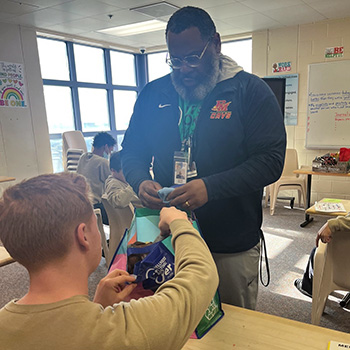
To acknowledge and talk about mental health issues, students engaged in meaningful activities such as writing thank you notes, journaling, creating a grateful worksheet, making friendship bracelets, drawing their dream house, remembering and paying tribute to loved ones who have died, and making dog toys for animal shelters. A bingo card helped students keep track of activities completed over the two days. A county intervention specialist was available teachers with the activities. And one student from each pod, wearing a bright green “It’s OK not to be OK t-shirt, was designated an assistant for the teachers.
“I’m so grateful to our teachers and Youth Center staff for supporting our students in this way,” said Judge Kari Bloom. “While they are in our care, we have a tremendous opportunity to support students through small classes and individual attention. What they learn and how they are treated has a huge impact on the choices they make and who they become when they return to our community.”

