

“Food for our Bodies and Flowers for our Souls”
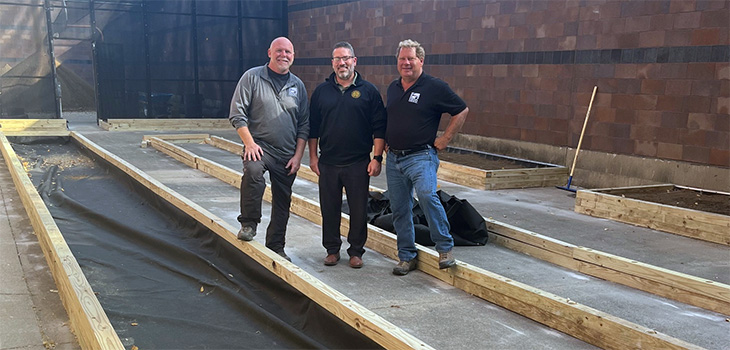
Pictured: Cincinnati Zoo Horticulture Operations Manager Danny Rupp, Youth Center Director Brian Bell, Cincinnati Zoo Horticulture Manager Steve Foltz
Hamilton County Juvenile Court (HCJC) is partnering with the Cincinnati Zoo & Botanical Garden to transform part of its outdoor recreation space at the Youth Detention Center into an urban learning garden.
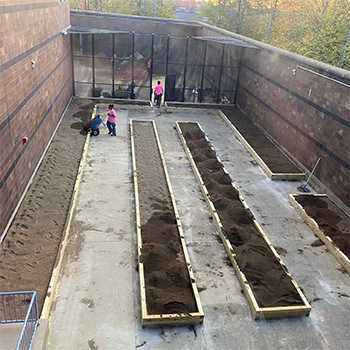
A team from the Zoo and Jostin Construction were on site in October building planting beds and delivering over 30 tons of soil, via a huge crane.
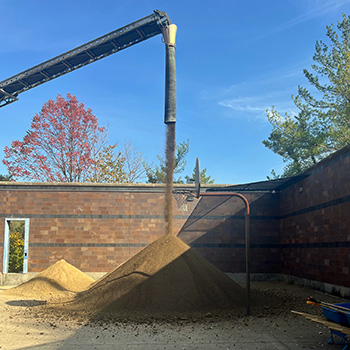 “The success of this project depends on the soil,” says Steve Foltz, director of horticulture for the Cincinnati Zoo. “The soil we used is one-third topsoil, one-third compost, and one-third sand blended for good drainage, pore space and fertility.”
The garden will be maintained by residents of the Youth Center, which houses children awaiting Court appearances, and volunteers with support from Zoo staff.
“This is a tremendous opportunity for our kids,” said Brian Bell, director of the Youth Center. “It is our responsibility to rehabilitate children while they are in our care. This partnership allows them to be outdoors, learn new skills, and experience the satisfaction of growing everything from tulips to blackberries to eggplant from scratch.”
According to Foltz, “Working in the garden is such a rewarding experience, growing food for our bodies and flowers that touch our souls.”
The plants chosen for the project are from the zoo’s plant trialing program that helps gardeners be more successful, especially in urban and suburban landscapes.
Fall planting includes tulip bulbs, thorn-less blackberries, several climbing and clinging vines to add greenery to the walls, ornamental grasses, and fall blooming plants including Aster ‘October Skies’, and Aster ‘Jin Dai’ that will offer late season color and provide nectar for the bees late into the season.
 Once the tulips are done blooming in the spring, they will be removed and the garden will be transitioned for summer. Annuals, including sweet potato vine, lantana, salvia, and strawflower, will be planted to provide beauty and color, as well as herbs such as lavender, thyme, fennel and basil. In addition, strawberries will be planted along with peppers, tomatoes, asparagus, and eggplant, all of which will be used for meals prepared in the Youth Center kitchen, run by Aramark.
Perennials will include Becky shasta daisies, coneflower, black-eyed Susan, wild blue indigo, phlox, liatris, and many others that will draw in pollinators but also can be used as cut flowers for the residents to share with their visitors.
“Working in the garden is such a rewarding experience,” says Foltz. “It’s a life skill that is desperately needed to bring back healthy ecosystems in these areas. We hope that this garden can help accomplish that goal in a small way.”